
Patan, one of the oldest cities, was established by the Kirat Dynasty in the 3rd century BC. Later, this city was expanded in the 6th century. Most people outside the valley know Patan as the renowned Patan Durbar Square.
Actually, Buddhism and the ancient city of Patan are related. Patan was initially planned to resemble a Buddhist Dharma Chakra. Numerous historical accounts state that in 250 BC, Emperor Ashoka traveled to Kathmandu with his daughter and constructed five Ashoka Stupas, one of which was situated in the center of Patan. This culturally rich city is an essential part of Buddhist culture, as it is home to several historical monuments that characterize it. It is also home to some 1,200 Buddhist monuments.
This article isn’t just a description of Patan’s beauty; it’s an invitation to experience the city the way it truly is. It’s written for travelers who don’t want to rush from one landmark to another but prefer to slow down and understand a place’s spirit. Patan deserves that kind of attention.
Arriving in Patan: First Impressions and Atmosphere
Patan is the kind of place that feels welcoming the moment you arrive, where history is still part of everyday life. You will find the culture opening up in people’s everyday life, their work, and prayer. Once you start strolling around Patan, you will be amazed by what Patan has stored for you in its texture, craftsmanship, and gentle surprises hidden between temples, courtyards, and narrow alleyways.
Patan moves at a different pace than Kathmandu. The streets get narrower, the homes sit closer together, and suddenly the atmosphere changes. It feels older, more intimate, almost as if you’ve stepped into a part of the city where time has slowed down. It’s less chaotic than Kathmandu, but there are enough tiny moments to keep your attention.
Patan Durbar Square – The Living Heart of the City
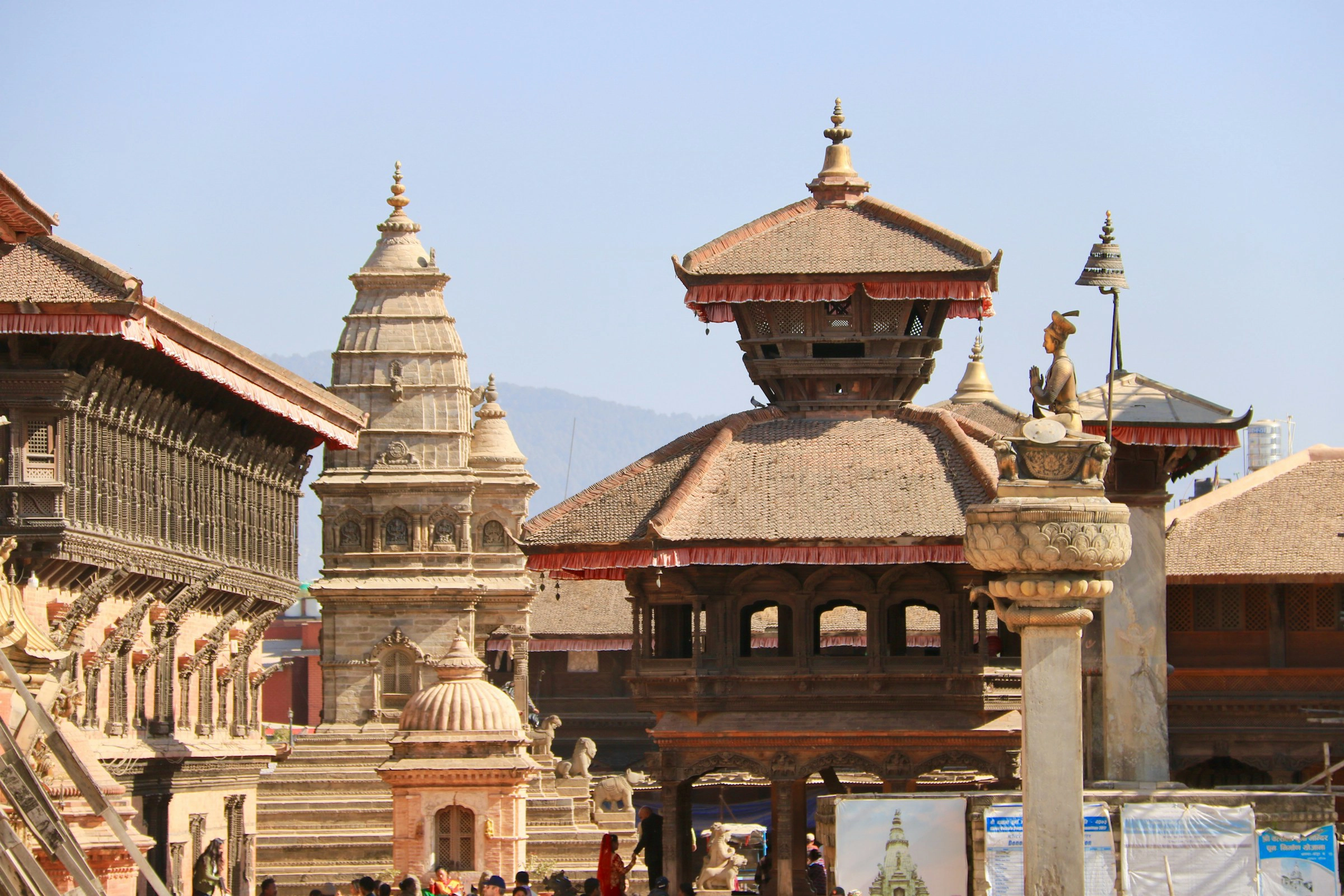
The Patan Durbar Square, a UNESCO World Heritage Site, is famous for its rich history of metal statues, stone carvings, and handicrafts.
The crazy thing about visiting Patan is that no matter where you start, the path somehow brings you to Durbar Square. The Durbar Square is the heart of Patan, where you will connect spiritually, visually, and culturally.
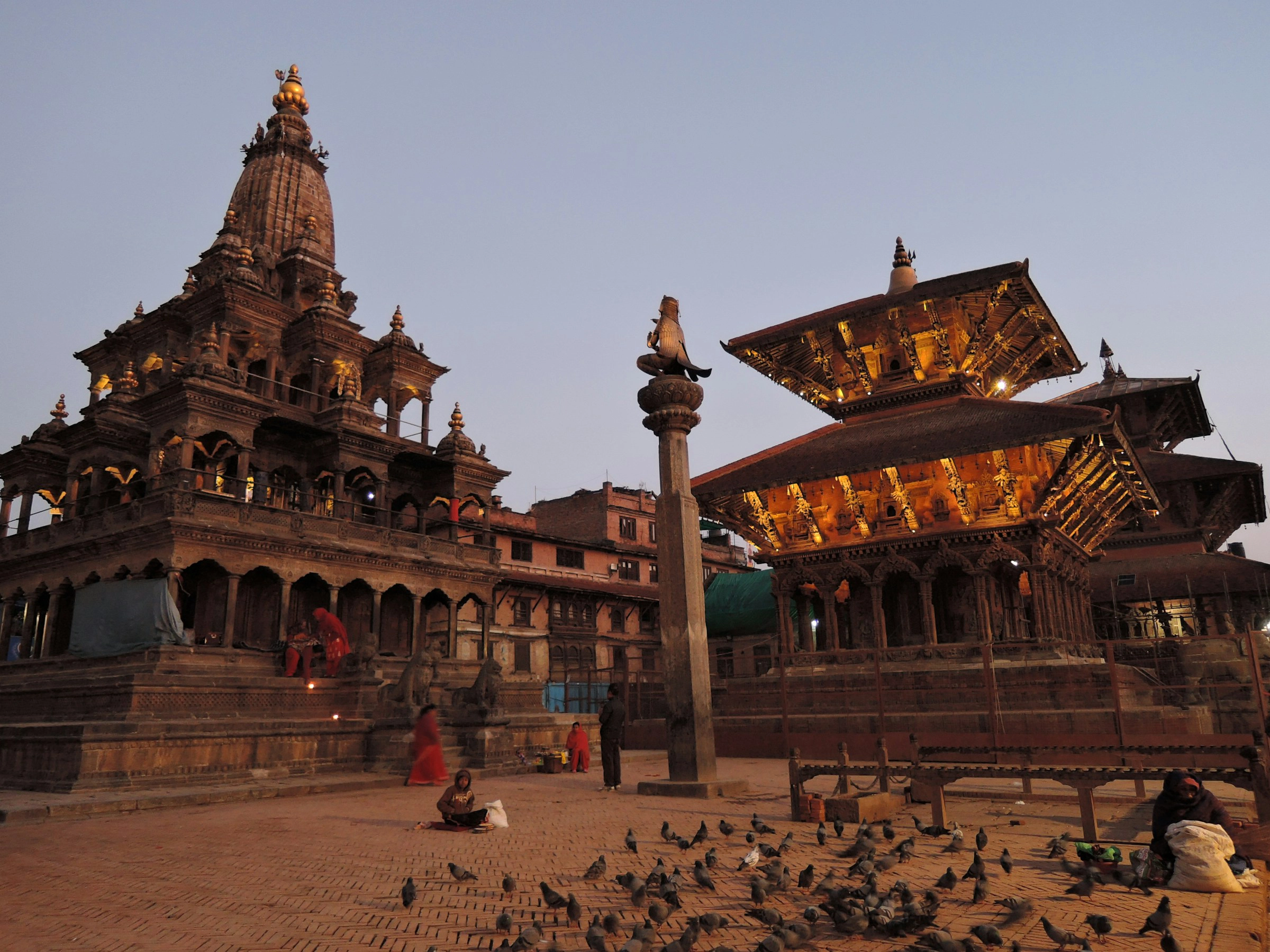
With your first step in the Square, the space opens up in a way that feels almost cinematic. Temples rise in elegant tiers, their carved wooden beams catching the light, and stone lions keep silent watch over stairways that lead to sacred spaces.
Things you will never forget about the Durbar Square:
- The mix of temples, palaces, and shrines that appear all at once when you enter the square.
- The smell of incense drifting from small courtyards.
- Elderly locals sitting on “pati”, talking and observing the day pass.
- Kids weaving in and out of the alleys as if the whole square is their playground.
- Artists selling handmade jewelry, carvings, and metalwork.
- The calm evenings when the light turns the brick and wood a deep golden shade.
There is no rush here. You could sit on the steps of an old temple for an hour and feel like you’ve absorbed more history than any guidebook could offer.
Patan Durbar Square isn’t a monument; it’s a heartbeat. Locals use it as a meeting point, a resting place, a place for worship, or sometimes just a shortcut home. During festivals, it comes alive with color and music. In the early morning, it feels tender and quiet, and in the evening, the brick and temples glow warmly as the sun goes down.
While strolling around Durbar Square, don’t miss the Krishna Mandir, standing tall at the center of the square. Krishna Mandir is built entirely of stone and decorated with intricate carvings depicting scenes from Hindu epics. At dusk, when lamps begin to glow, the temple looks particularly magical.
Patan Museum – Art, Heritage, and Quiet Reflection
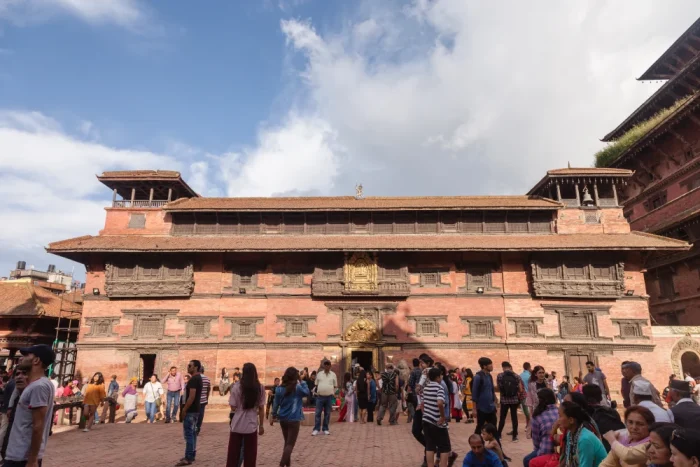
If you want to understand the soul of Patan, spend some time at the Patan Museum. The building itself is a piece of history, once part of the old royal palace. Inside, you’ll find beautifully preserved artifacts that show how skilled Nepali artists have been for generations, including delicate metal statues, detailed wooden sculptures, and objects once used in rituals.
Unlike many museums, this one feels peaceful. You wander through quiet rooms, step into the open courtyard, and realize how deeply art and spirituality are woven into everyday life here.
And then there is the courtyard. Step outside for a moment and you’ll find a quiet garden tucked between brick walls and shaded by greenery. It’s peaceful, calm, and surprisingly still. After exploring Kathmandu’s busy neighborhoods, this serene space feels like a much-needed pause.
The Hidden Courtyards and Bahals – Patan’s Secret World
One of the things that makes Patan special is what you find between the main roads. Step into almost any narrow alley, and you’ll discover a bahal or courtyard. These bahals are the spaces that locals use every day. Many of them are centuries old, marked by small shrines, water spouts, prayer wheels, and traditional houses built closely around them.
These courtyards aren’t tourist spots. They are living spaces where families dry clothes, children play, and neighbors gather for a chat. Exploring them gives you a closer look at the real Patan, the part that doesn’t appear on travel brochures but holds the city’s deepest charm.
Here are a few to keep an eye out for:
Kwa Bahal
A tranquil, historic courtyard where locals come to pray or sit in the sun. Its layered woodwork and stone images make it worth lingering a little longer.
Nagbahal
A spacious courtyard that feels like a hidden neighborhood of its own, complete with temples, old houses, and the rhythmic sounds of daily life.
Sundari Chowk
Inside the Patan Museum complex, this is one of the most beautifully restored courtyards in the valley. The stone bath at the center (Tusha Hiti) is a masterpiece of Newar design.
How to explore them like a local:
- Don’t hesitate to take the narrow alleys; that’s usually where the courtyards hide.
- Follow the soft sound of prayer wheels or footsteps, which often guides you to a bahal.
- Step inside with respect since these spaces are part of community life.
- Notice the details: some courtyards feel lively, others calm, each with its own story.
Without these courtyards, Patan would be a city of history. With them, it becomes a city of living memory.
Artisan Workshops – Where Craft is Still Made by Hand
As you continue further into Patan, particularly around Oku Bahal, you’ll notice a soft, repeated tapping in the background. That sound comes from the metalworkers. They sit on small wooden platforms, slowly hammering copper and brass into beautiful forms. From religious statues to household items, everything is made by hand, right there in the open.
These aren’t souvenir factories. They’re family workshops where the craft is handed down from one generation to the next, just like a family heirloom.
So, where will you explore the crafts in Patan?
There are a few spots where you should definitely visit and explore.
- Mangal Bazaar for metalwork
- Okubahal for traditional paintings
- Near Golden Temple for handmade crafts and artisan workshops.
Buying something from these places has real meaning. You’re supporting families who have kept these skills alive for generations and who continue to define Patan’s artistic identity.
Even if you don’t buy, simply watching is mesmerizing.
Food, Tea, and Newari Flavors
As you explore Patan’s alleys, squares, and courtyards, make time for short breaks. This city is best experienced slowly, and its food naturally becomes part of the journey. Newari dishes carry bold flavors and a strong sense of place, giving visitors a direct connection to the local culture.
Local tastes to try:
- Yomari – steamed dumplings filled with sweet molasses.
- Bara – savory lentil patties served with egg or meat.
- Choila – spiced grilled meat often served with beaten rice.
- Aloo Tama – bamboo shoot and potato curry.
- Sweet milk tea served in small glasses or clay cups.
If you want to enjoy Patan’s real flavors, you should follow the locals, not the signboards. The best meals are found in small family-run eateries that can only be found inside courtyards or along narrow alleys. These places may look simple, but the food feels homemade and comforting.
Temple Details and Symbolism
Even if you’re not religious, the symbolism woven into Patan’s temples and shrines adds another layer to your visit. As you walk around, keep an eye out for the small details that locals barely think twice about but carry centuries of meaning.
You should definitely look for:
- Carved wooden roof bars depicting protective deities.
- Stone guardian lions and their stance.
- Bells that worshipers tap gently for good fortune as they pass.
- Oil lamps flickering against darkened shrines.
- Offerings of marigolds, rice, and colored powder.
You don’t need to step into every temple. Sometimes the best way to understand these places is to stand outside for a moment and watch how people move around them.
Golden Light and the Changing Mood of the City
If you’re still in Patan by late afternoon, you’ll notice the whole place beginning to settle into a different rhythm. This is one of my favorite times to be here. The sun drops low enough to warm the brick buildings with a soft golden color, and the temples look almost sculpted by the light. You’ll see long shadows stretching across the square, and the usual daytime noise slowly fades.
If you stay until sunset, the square becomes softer, quieter, almost reflective. Lamps are lit, incense burns, and the city feels wrapped in a gentle stillness.
A Gentle Note from Atisha Hotel
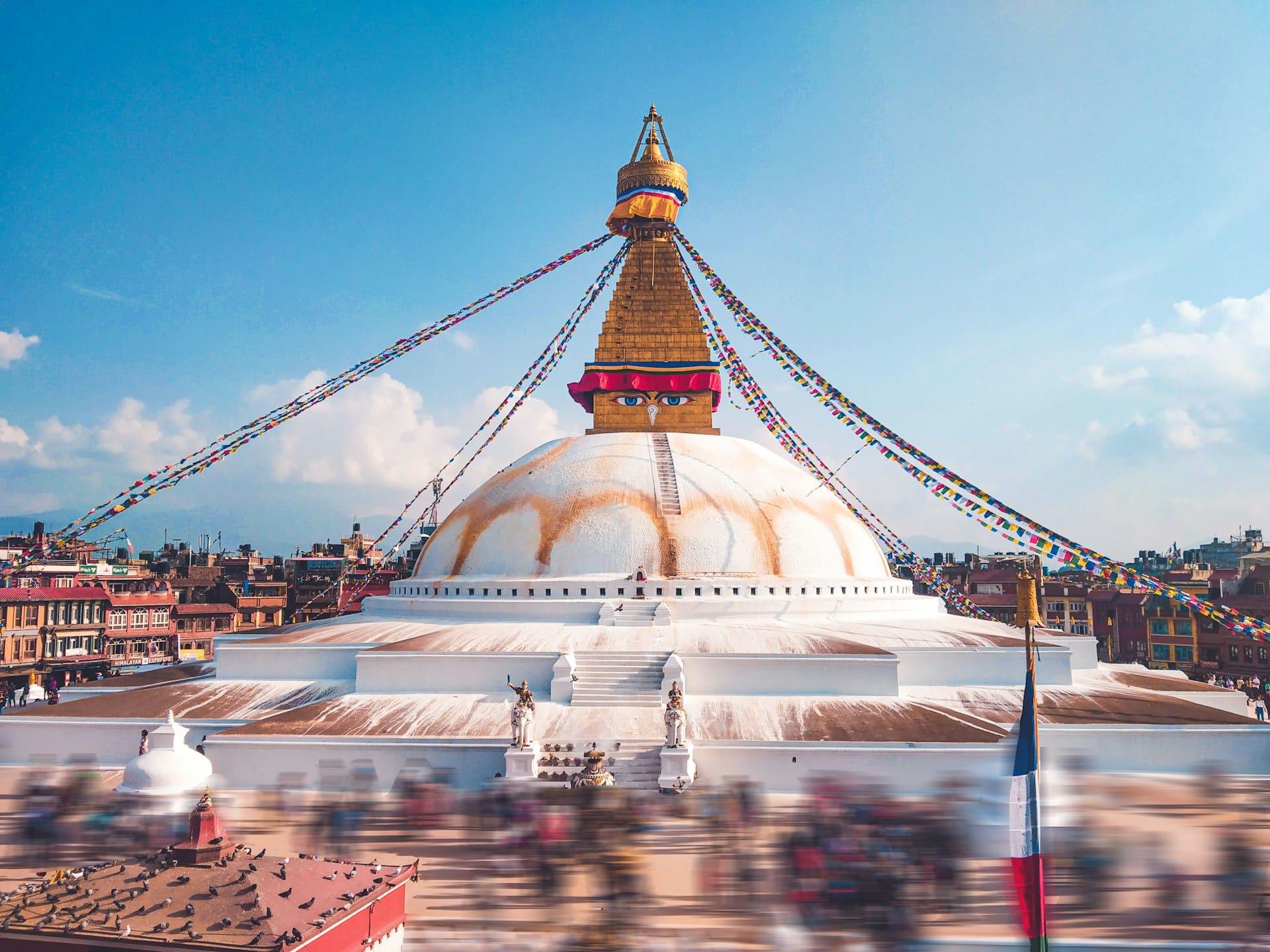
Many guests at Atisha Hotel in Boudha like to start their day with a quiet morning by the Stupa and then take a day trip to Patan. The contrast is part of the experience where Boudha offers calm, spiritual energy, while Patan pulses with art, history, and local life. Spending time in both places gives you a fuller, more balanced sense of the Kathmandu Valley.
We aim to make your journey as effortless as possible. If you’d like to explore Patan comfortably, you can book our eco-friendly EV van service right from the hotel. It’s a quiet, sustainable way to move through the city, giving you the freedom to explore at your own pace.
To reserve, message us on WhatsApp at +977-9809496444, and we’ll help plan your route.
Practical Tips for Visiting Patan
- Best time to visit: morning or late afternoon.
- Wear comfortable footwear.
- Bring a camera, but photograph respectfully.
- Explore beyond the main square, wander, and get pleasantly lost.
- Hire a guide if you like stories, not lectures.
- Carry small cash for tea, snacks, and entry fees.
In the End: Why Patan Stays with You?
Patan is the kind of place that doesn’t just show you its history, it lets you live it, even if only for a few hours. The alleys, courtyards, and temples have a rhythm of their own. You notice it in small moments: children running through a bahal, artisans hammering copper on low benches, or the quiet hush that falls over the square as evening approaches.
It’s easy to come here focused on the famous temples, the carved rooftops, or the museum artifacts. But what stays with most visitors is something quieter: the way life unfolds naturally around centuries-old buildings, the small rituals that continue unchanged, and the sense that art, tradition, and daily life are woven seamlessly together.
Believe it, even after you’ve left the streets and courtyards, Patan lingers in your mind.