
If you’re visiting Nepal and want to truly understand its culture, history, and traditional lifestyle, Bhaktapur is a place you shouldn’t miss. As locals often say, “Kathmandu shows modern Nepal, but Bhaktapur shows the soul of old Nepal.”
Bhaktapur, a short drive from Kathmandu, is one of the best, well-preserved, and beautiful ancient cities in the Kathmandu Valley. Once you walk through the brick-paved alleys, you will feel as if you are stepping into the past, witnessing people going to the temples as they did, people still celebrating festivals with great joy, and artists continuing the traditional crafts. You are not just visiting the place; you are diving into its history and experiencing it firsthand.
In this Bhaktapur travel guide, we’ll take you through the main tourist attractions in Bhaktapur, while also sharing local insights that most visitors miss. Whether you’re here for a day tour or a deeper cultural journey, Bhaktapur has a way of staying with you long after you leave.
Also, witness the city from a new perspective with Atisha Hotel’s eco-friendly EV van service. This comfortable and eco-friendly way lets you experience the rhythm of local life while avoiding the usual travel rush.
You can book the EV van efficiently by contacting us on WhatsApp at +977-9809496444. We’ll be happy to help you plan a route that matches your interests and pace.
Why does Bhaktapur feel different from other cities of Kathmandu Valley?
Unlike other cities, Bhaktapur has protected its traditional architecture and lifestyle. Vehicles are limited in the old town, which makes exploring peaceful and enjoyable. As a tour destination, it offers a complete cultural experience in a compact area.
Bhaktapur is perfect in its own way, and you can experience:
- Authentic Newari culture
- Well-preserved heritage sites
- Fewer crowds compared to Kathmandu & Patan
- Rich history, architecture, and local life
Bhaktapur Durbar Square
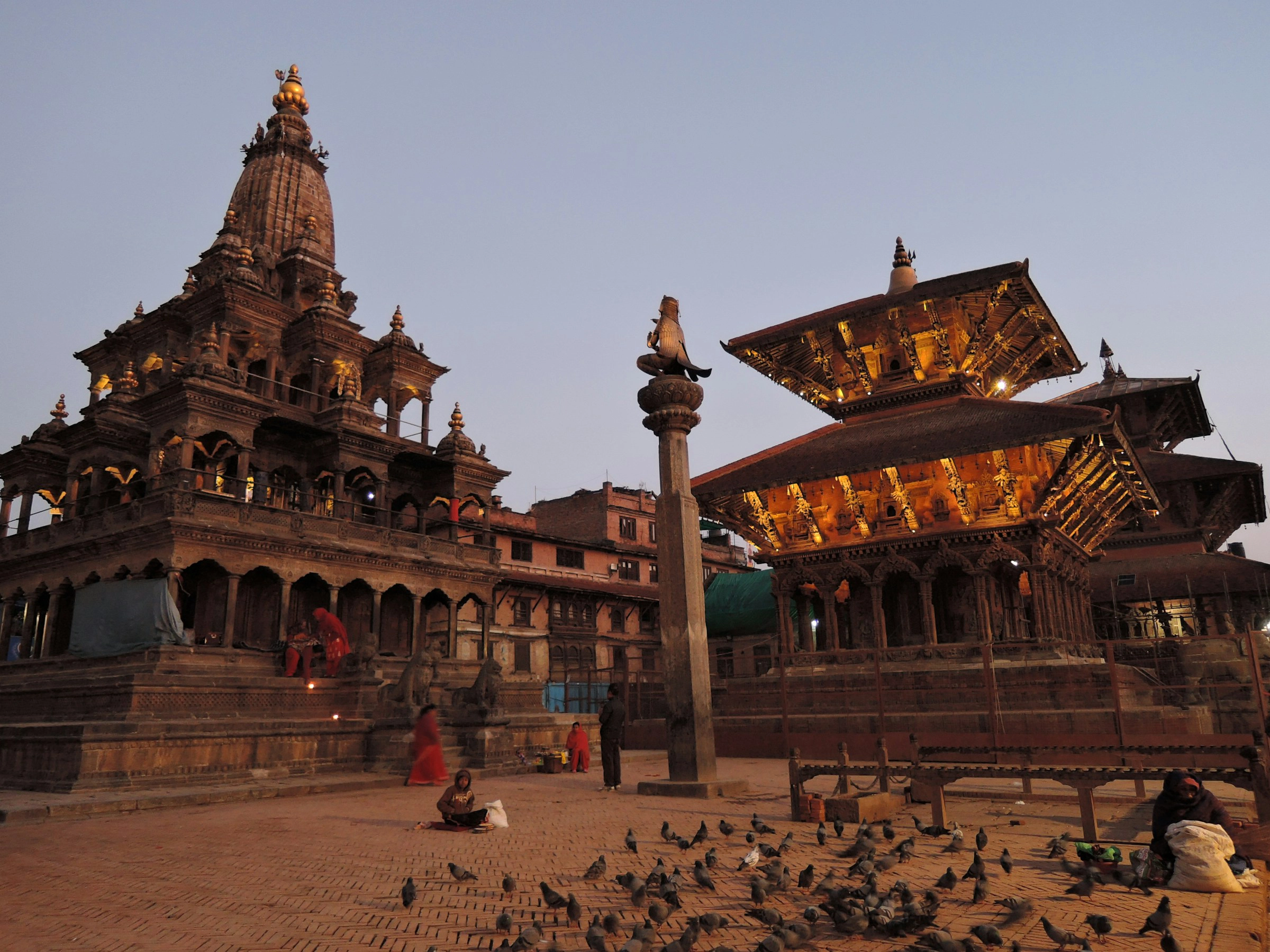
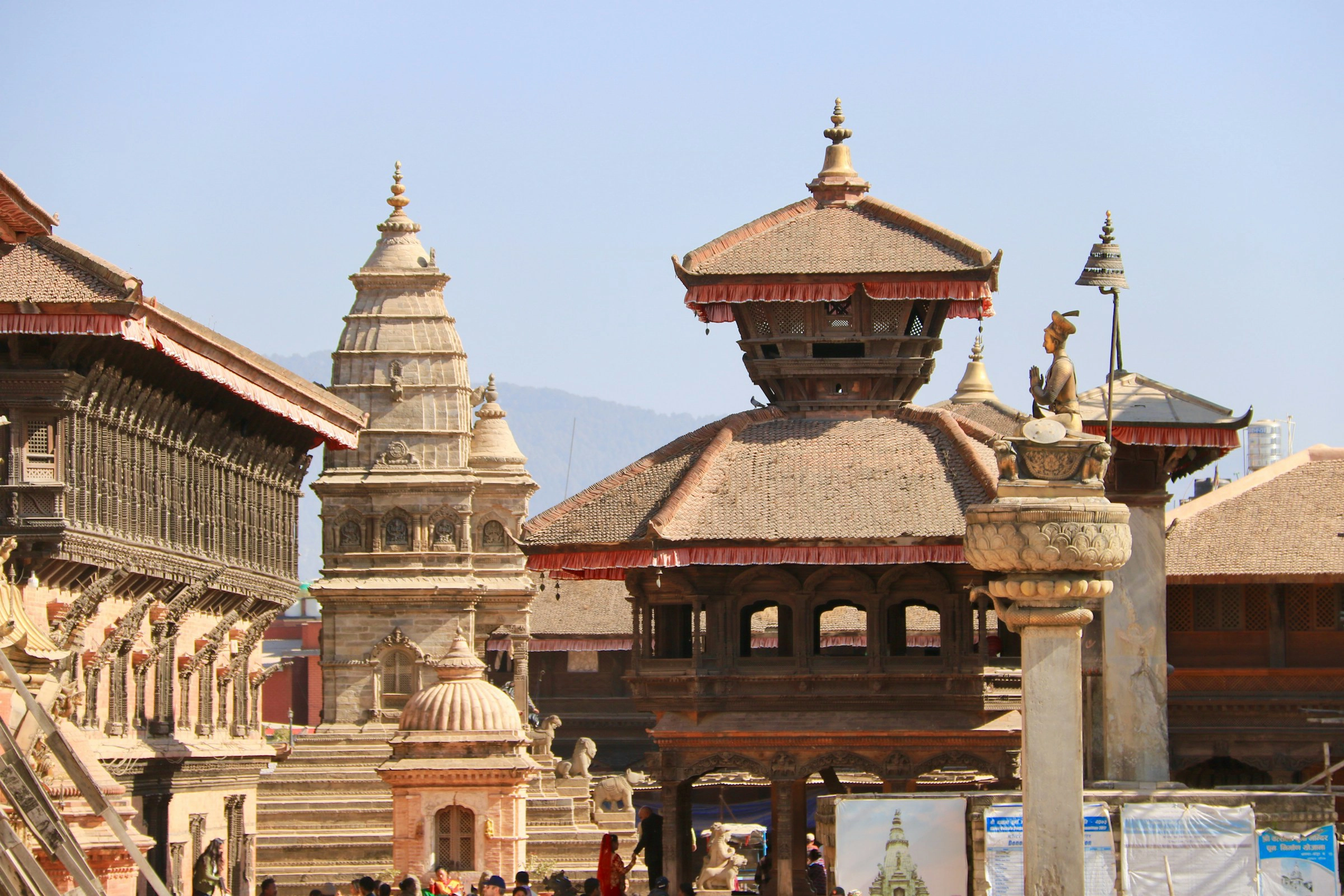
Bhaktapur Durbar Square, a UNESCO World Heritage Site and the royal palace of the Malla kings, is the most important and visited attraction in Bhaktapur. This square today is an open museum of palaces, temples, and courtyards that reflect the golden age of Newari art and architecture.
Highlights of Bhaktapur Durbar Square
There are plenty of things to explore around the Durbar Square, and below are the major highlights you should not miss.
The 55-Window Palace
The 55-Window Palace, built in the 15th century, is one of the best examples of traditional Newari craftsmanship in Bhaktapur. This palace was built in the 15th century and served as the Malla kings’ royal residence.
As you look closely at the windows, you will find that each has a different pattern and is entirely hand-carved. If you get the chance to talk with the locals, you will be amazed at how they beautifully describe this palace. They often resemble this Newari craftsmanship as an example of Bhaktapur being called an open museum.
Golden Gate (Sun Dhoka)
The Golden Gate, locally known as Sun Dhoka, is the main entrance to the inner palace courtyard. It is the most beautifully decorated palace gate in Nepal, adorned with gold and copper, featuring detailed carvings of Hindu gods and goddesses. When you look closely at the gate, you will be amazed by the high level of craftsmanship during the Malla period.
This gate was not built to look grand at that time. It was also meant to protect the palace spiritually. The art of deities was carved here to guard the royal family and bring good fortune. This makes the Golden Gate both a work of art and a symbol of divine protection.
Taumadhi Square
Taumadhi Square is one of the busiest and liveliest squares in Bhaktapur. This square is home to two well-known sites in the city: Nyatapole and Bhairabnath Temple. This square is loved and widely admired by both local and foreign tourists.
Nyatapola Temple, a five-storeyed temple built in 1702 by King Bhupatindra Malla, is one of the tallest pagoda-style temples in Nepal. What makes this temple special is its strength and balance. Locals proudly say that even after many earthquakes, it is still standing.
As you walk up the steps, you can see the stone statues on both sides. Each pair is meant to protect the temple, and each one is believed to be stronger than the one below. When you reach the top, you will witness the beautiful view of Taumadhi Square and the old houses of Bhaktapur. You should definitely spend some time at the top and capture the moment.
Dattatreya Square
Dattatreya Square, located in the northeast of Bhaktapur Durbar Square, is the oldest of the four squares. This square is named after the Dattatreya Temple, built in 1427 by King Yaksha Malla, which is the only temple in Nepal dedicated to Dattatreya. Dattatreya is generally the trinity form of three major Hindu deities, Brahma, Bishnu, and Mahesh. Locals believe the temple was built from the wood of a single tree.
Around the Dattatreya temple, you can visit other temples too, including Laxmi Narayan Temple, Bhimsen Temple, and Salan Ganesh Temple. You can also find two museums: the Wood Carving Museum and the Brass & Bronze Museum.
Pottery Square
Pottery Square, also known as Talako Tole, is a large, open square used by local potters for traditional clay work. The pottery produced here includes water jars, bowls, lamps, and household items commonly used in Newari culture.
Unlike other areas of Bhaktapur, Pottery Square has very few temples and is mainly a working space rather than a ceremonial one. You will witness the open-drying area, potters’ wheel, potter’s square kilns, souvenir stalls, Vishnu shrine, and Jeth Ganesh temple.
Today, this place remains a genuine potters’ square, where you can still witness the traditional Nepali pottery-making process carried out by local families using age-old techniques passed down through generations.
Changunarayan Temple
Changunarayan Temple, a UNESCO World Heritage Site dedicated to Lord Vishnu (Narayan), dates back to the 4th century during the Lichhavi period and is one of the oldest Hindu temples in Nepal. This is mentioned in King Manadeva’s 464 CE inscription, near the temple, written in Sanskrit and engraved in Gupta script.
Changunarayan Temple is built in a unique 2-tiered structure (neither pagoda nor shikara style), adorned with carvings and features four doorways guarded by lions. Here, you will see carvings of Lord Vishnu’s incarnations, such as the Narsimha avatar, Lord Vishnu’s Vishwaroop, and more.
This temple is home to several minor shrines dedicated to various Hindu deities, including Lord Shiva, Lord Bhairav, and the Navagraha, or nine planets. Every shrine has a distinctive architectural design that honors the god it is devoted to, and those sculptures and carvings prove the skills of the people of that time.
Visiting Bhaktapur during Festivals
If you are lucky enough to visit Bhaktapur during festival time, you will see a very different side of the city. On these days, the quiet streets fill with music, color, and crowds, and the whole city feels alive. There are a few times you should not miss in Bhaktapur.
During the Nepali New Year, Bhaktapur organizes the Bisket Jatra, Bhaktapur’s biggest festival, in which huge wooden chariots are pulled through the streets. The energy, drums, and excitement make it an unforgettable experience.
You may also encounter festivals such as Gai Jatra and Indra Jatra, featuring traditional costumes, masked dances, and rituals. If you get to see these festivals, you are seeing the Bhaktapur in its local, raw form. During festivals, Bhaktapur is a place full of joy, emotion, and belief.
Food Attractions You Shouldn’t Miss
As you explore Bhaktapur, you will start noticing small food shops and local eateries along the streets. This city is known for simple but very traditional flavors, and tasting local food is part of the experience.
You will definitely hear people talk about juju dhau, the famous “king curd” of Bhaktapur. It is thick, creamy, and lightly sweet, usually served in a small clay bowl. It tastes finest here, according to many tourists, and locals are proud of it.
Traditional Newari dishes such as yomari (a sweet dumpling filled with molasses), choila (spiced grilled beef), and bara (lentil pancakes) are also available. These foods are not fancy, but they are part of everyday life here. You should actually try these to feel the Newari taste. There are even more homemade foods made during festivals.
Best Time to Visit Bhaktapur
Although it is possible to visit Bhaktapur at any time of year, some seasons offer a more pleasurable experience. Spring (March to May) and fall (September to November) are the ideal times to go. The weather is nice, the skies are clear, and it’s easy to stroll around the ancient city during these months.
You will see Bhaktapur at its best if you visit early in the morning or late in the afternoon. The streets are quieter, the light is gentler, and everyday life is unfolding organically all around you. Another great time to visit is during festival seasons, when the city comes alive, and you can better understand the native way of life.
Why Bhaktapur Stays with You?
Bhaktapur has so much to offer that it cannot be summed up in a single landmark or spot. As your visit comes to an end, you may realize that Bhaktapur feels different from other places you’ve seen. It’s not just about the temples or the squares, but the feeling of the city itself. You’ll witness folks praying at small shrines, artisans quietly working, and families carrying on generations-old traditions. The alleys are narrow, small, and brick-paved, and your walk on those alleys lets you feel the actual Bhaktapur in local style, and the serenity remains with you. That’s why Bhaktapur doesn’t just feel like a place you visit, but a place you carry with you even after you leave.
How does Atisha Hotel come in handy?
Staying at Atisha Hotel helps you keep that peaceful feeling even after you leave the streets of Bhaktapur. After a full day of walking through temples and heritage squares, it’s a calm and comfortable place to relax and slow down. The warm hospitality and quiet atmosphere make your stay feel easy and natural, letting you experience Bhaktapur not just as a place you visited, but as a feeling you’ll remember.